7 Best Places to Buy Research Peptides in the USA in 2026
A vendor's COA looks clean until you check who issued it. Sourcing research peptides in the USA means sorting suppliers by batch documentation, shipping terms, and compliance signals, and vague purity claims are the fastest reason buyers start comparing alternatives.
This article gives you concrete criteria for evaluating testing, COAs, and red flags, then ranks the 7 best places to buy research peptides in the USA in 2026. You will see why Kovagen takes the top spot and finish with a clear pick for your lab.
What to Look For in Research Peptide Suppliers in the USA
Selecting a research peptide supplier in the USA requires scrutinizing documentation, logistics, and compliance signals, not just catalog listings. In 2026, the peptide market has grown crowded, and the gap between serious laboratory suppliers and storefronts that repackage low-grade material has widened.
Researchers should prioritize vendors who publish batch-specific third-party testing, maintain transparent shipping policies, and show no regulatory red flags. A polished website means little if the underlying documentation cannot be verified.
The criteria below focus on what can be checked before placing an order. Each one applies whether you are buying BPC-157, TB-500, or any other research-grade peptide.
Third-Party Testing, COAs, and Purity Documentation
A credible supplier should provide a batch-specific certificate of analysis (COA) from an independent lab, not an in-house report. The COA is the single most useful document for judging whether a vendor takes quality assurance seriously.
Start with HPLC purity. A reputable vendor typically reports 98% or higher, with the chromatogram or a summary of the result attached. Next, confirm that mass spectrometry data verifies the expected molecular weight for the compound in question.
Batch traceability matters just as much. The lot number on the COA should match the lot number on the vial you receive. If a COA cannot be retrieved without creating an account, treat that as a friction signal worth noting.
Some vendors advertise "third-party testing" but only test occasionally. Look for per-batch testing, where every production lot has its own documentation rather than a single report reused across the catalog.
A quick checklist for any COA:
- Name of the independent testing laboratory
- Analytical methods used, such as HPLC and mass spectrometry
- Purity result with the batch or lot number
- Testing date that is recent relative to the batch
If any of these elements are missing, ask the vendor directly before ordering.
Shipping, Pricing, and Compliance Red Flags
Shipping speed, packaging, and payment options can reveal whether a vendor operates with research-grade rigor or cuts corners. Domestic shipping with tracking is a baseline expectation for USA buyers in 2026.
Temperature-sensitive peptides may require cold-chain shipping or insulated packaging, and the vendor should say so clearly. Dispatch timelines should also be stated up front rather than buried in fine print.
Pricing should be transparent in USD and roughly consistent with market rates. Extremely low prices can signal low purity or a lyophilized powder of uncertain origin, so compare carefully rather than chasing the cheapest listing.
Compliance red flags deserve equal attention:
- Vendors making human-use claims or dosing advice
- Listings for unapproved drugs presented as research chemicals
- No physical address or verifiable business identity
- Cryptocurrency-only payment with no traceable alternative
Reputable vendors typically offer credit card or other traceable payment methods. Customer reviews on independent platforms can add context, but documentation and policy clarity remain the stronger signals.
1. Kovagen (KOVA) - Best Overall
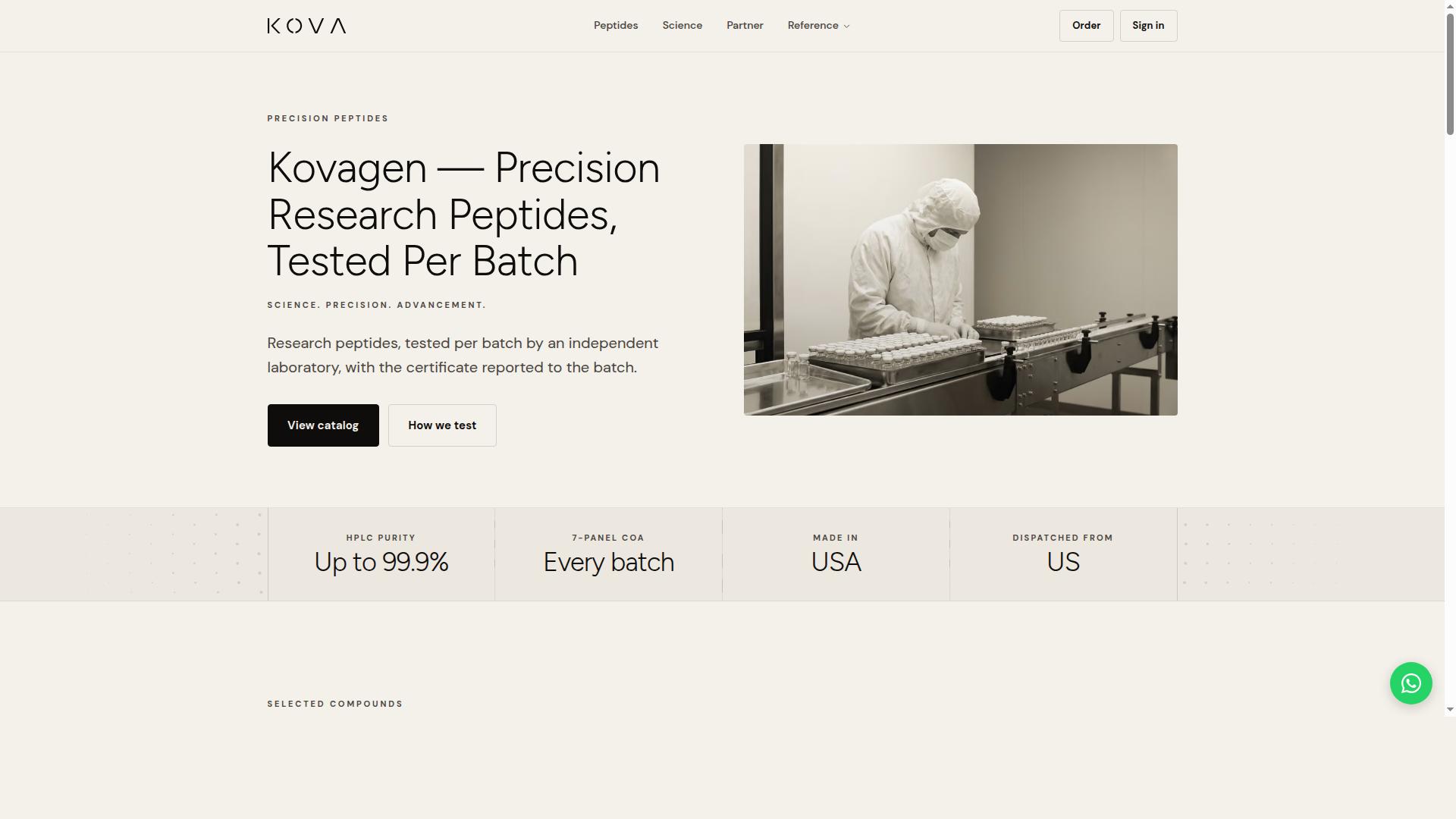
Kovagen (KOVA) earns the top spot for its per-batch independent lab testing and transparent COA access, backed by a straightforward U.S. and Canada shipping policy. For researchers who treat documentation as part of the product, that combination is hard to beat.
Rather than asking buyers to trust a general quality claim, KOVA ties every certificate to a specific lot. The details below cover how that testing works and what the catalog looks like.
Per-Batch Independent Lab Testing and 7-Panel COAs
Kovagen's quality model centers on independent analytical testing for every batch, with certificates of analysis tied to the specific lot number. The laboratory is external, not in-house, which matters when you are evaluating research-grade peptides for laboratory work.
Certificates are published per batch and retrievable by batch number without an account. That means you can verify a lot before ordering, or confirm the exact material you received after delivery. The brand states HPLC purity up to 99.9%.
Each batch carries a 7-panel COA. The brand confirms the panel count but does not publish a detailed breakdown of every individual test, so treat the specific panel contents as something to confirm on the certificate itself. What is verifiable is the structure: independent testing, one certificate per lot, public access by batch number.
A practical habit for any peptide vendor comparison: request the COA for the exact batch you receive, not a sample certificate from an earlier lot. Kovagen's batch-number lookup makes that check simple. Pair the certificate with the labels on your vial and confirm the lot numbers match before you begin work.
Researchers comparing peptide vendors in the USA should weigh documentation access as heavily as price. A certificate you cannot retrieve, or one that covers a different lot, offers little assurance about the material in hand.
Catalog, Pricing, and U.S./Canada Shipping
Kovagen stocks a focused catalog of lyophilized research peptides, singles and blends, with transparent USD pricing and FedEx 2Day shipping for U.S. orders. The catalog lists 30 compounds, including 22 single peptides and blends, plus research supplies such as BAC Water.
Sample pricing from the catalog:
- Retatrutide (GLP-3) from $95.00
- BPC-157 10mg at $80.00
- GHK-Cu from $55.00
- Wolverine (BPC-157 / TB-500) 10/10 at $140.00
- TB-500 10mg at $85.00
The range extends beyond those examples. The catalog also names Klow, CJC-1295 No DAC / Ipamorelin 5/5, MOTS-c, Tesamorelin, Glow, Ipamorelin, KPV, SS-31, Semax, Selank, Cagrilintide, Melanotan II, PT-141, Sermorelin, IGF-1 LR3, DSIP, Thymosin Alpha-1, SNAP-8, Kisspeptin-10, and Regeno, among others.
Shipping is limited to the United States and Canada. Every U.S. order travels by FedEx 2Day, and dispatch happens by the next business day. Shipments travel at ambient temperature. Delivery to other regions is not available, so buyers outside North America should plan accordingly.
All products are supplied as lyophilized powder and are for laboratory research use only. The brand states it does not publish customer reviews and does not provide dosing, administration, or reconstitution guidance. Researchers who need that kind of support should look elsewhere, while those who want batch-level documentation and domestic dispatch will find the model clear.
2. Core Peptides
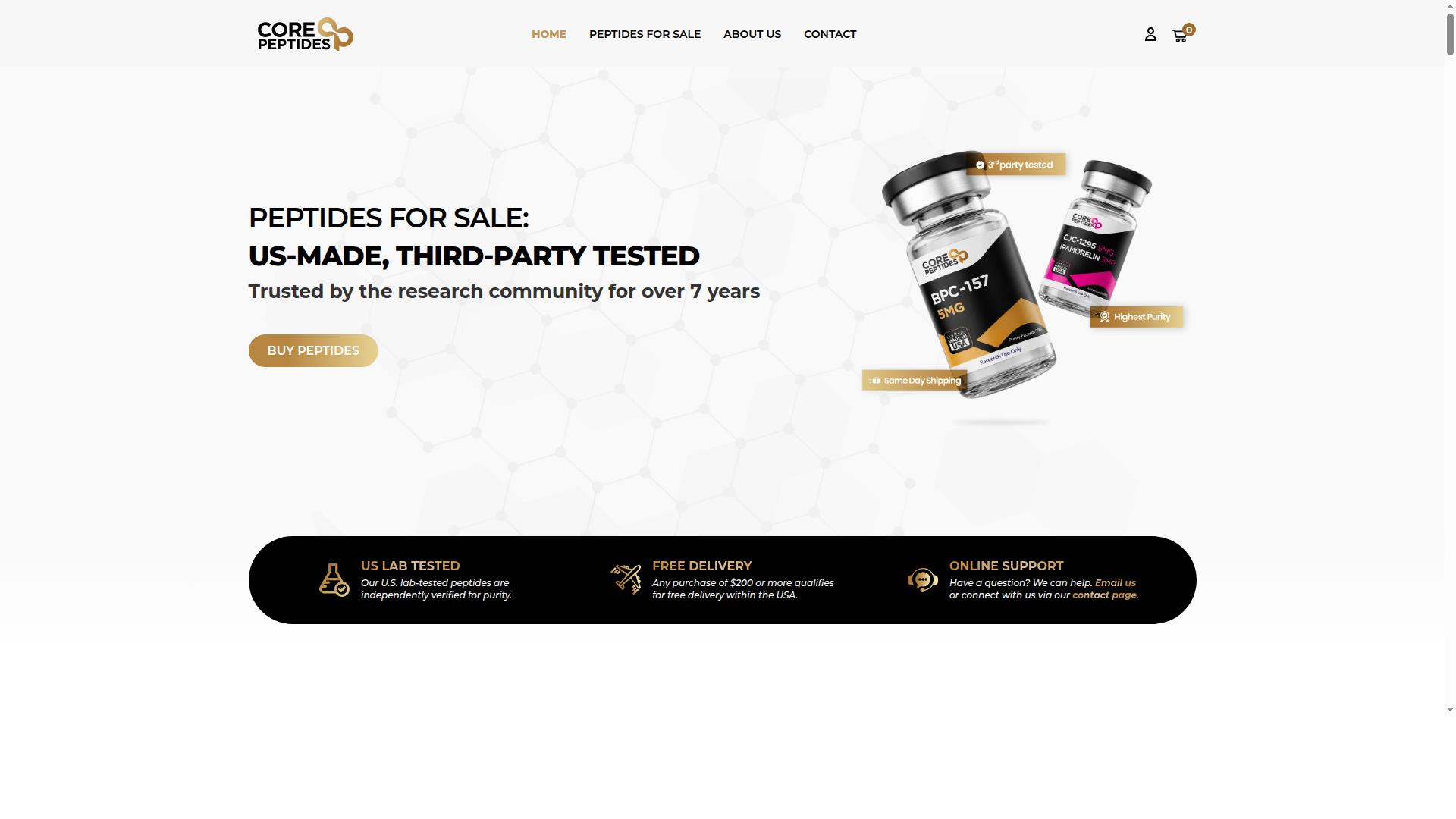
Core Peptides is a well-known U.S. vendor that has built a reputation on a broad catalog and domestic shipping, though researchers should verify batch-specific documentation. The company appears regularly in community discussions about where to buy peptides online, which is often how buyers first encounter the name.
Its main draw is selection. Shoppers can find a wide range of research peptides and supplies in one place, and domestic shipping means shorter transit windows than overseas laboratory suppliers typically offer. For buyers comparing peptide vendors in the USA in 2026, that combination of breadth and in-country fulfillment is worth noting.
Specifics deserve a closer look before ordering. Publicly available information does not confirm exact testing methods, purity figures, or current pricing, so treat any catalog claims as a starting point rather than proof.
- Request a certificate of analysis for the exact batch you intend to purchase, not a sample COA from an earlier lot.
- Confirm the COA shows third-party testing with HPLC purity and mass spectrometry results.
- Ask about current delivery time and whether the shipping policy covers cold-chain shipping for temperature-sensitive compounds.
- Check accepted payment methods and review recent customer reviews before committing.
These steps apply to any vendor, but they matter most when documentation is not posted openly. A quick email exchange usually settles whether a supplier can back its research-grade peptides with batch-level paperwork.
3. Swiss Chems
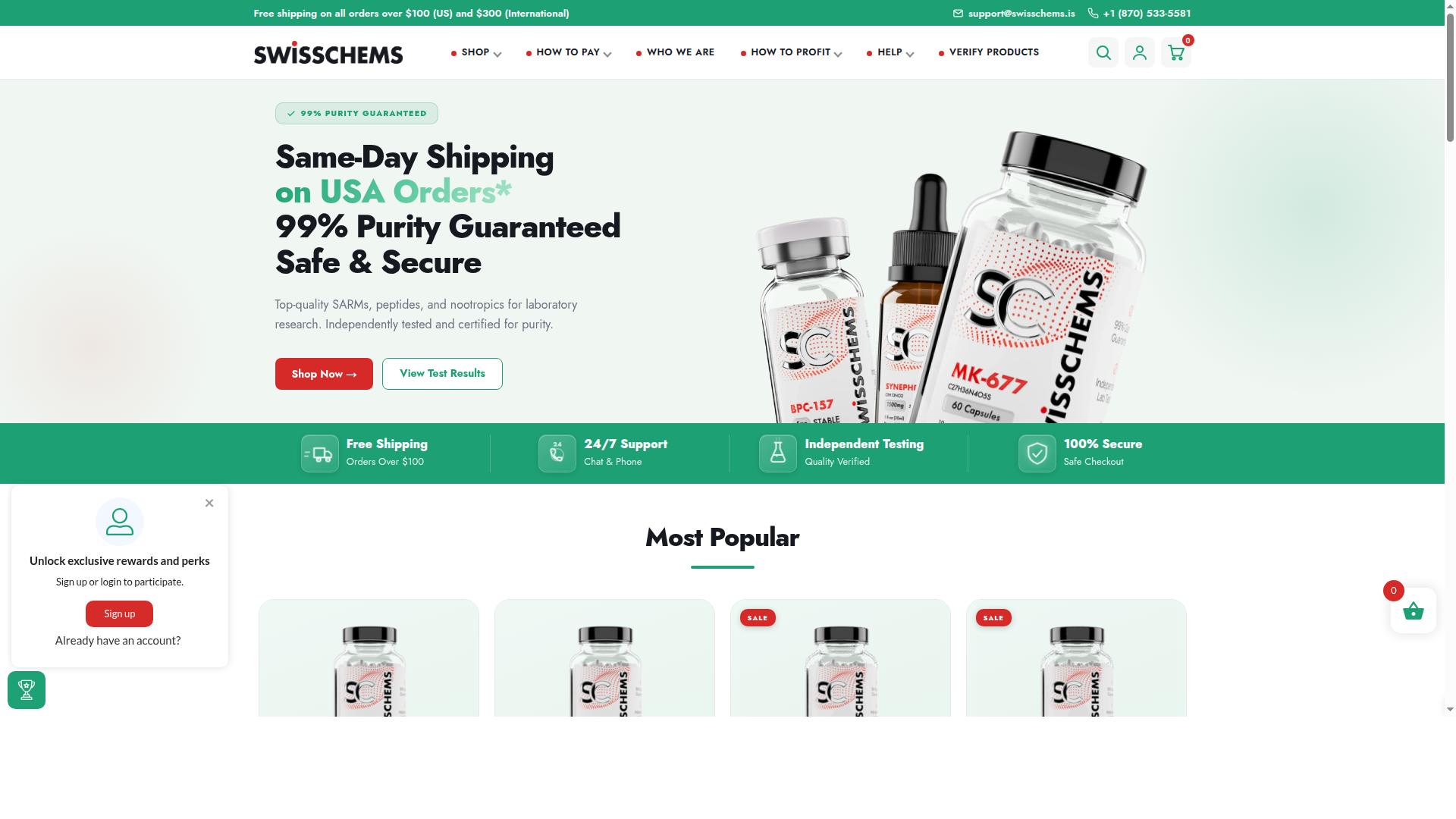
Swiss Chems is a vendor that markets research peptides and related compounds, often emphasizing third-party testing and a professional storefront. It appears in vendor comparison listings and sells research-use-only compounds such as BPC-157, CJC-1295, DSIP, Epithalon, GHK-Cu, TB-500, and Thymosin Alpha-1.
Public comparison data lists a catalog of 21 peptides, with several purity results on file from independent testing sources. Reported figures include BPC-157 at 99.8% and Melanotan II at 99.7%. These are useful reference points, but they cover only a handful of products, not the full catalog.
Example listed prices include BPC-157 10mg at $59.95, TB-500 10mg at $42.36, CJC-1295 20mg at $429.50, and Thymosin Alpha-1 500mg at $639.90. Treat these as indicative only and confirm current pricing before ordering.
Before buying, researchers should check the following for each batch:
- Request the certificate of analysis and confirm it matches the specific lot number on the vial.
- Verify that HPLC purity and mass spectrometry data appear on the COA itself.
- Confirm shipping terms to the U.S., and any international options, with the vendor directly.
- Review the stated storage and lyophilized powder handling guidance on arrival.
Swiss Chems can suit laboratory researchers comparing peptide vendors on price and purity data. Independent verification of each COA remains essential regardless of storefront claims.
4. Ascension Peptides
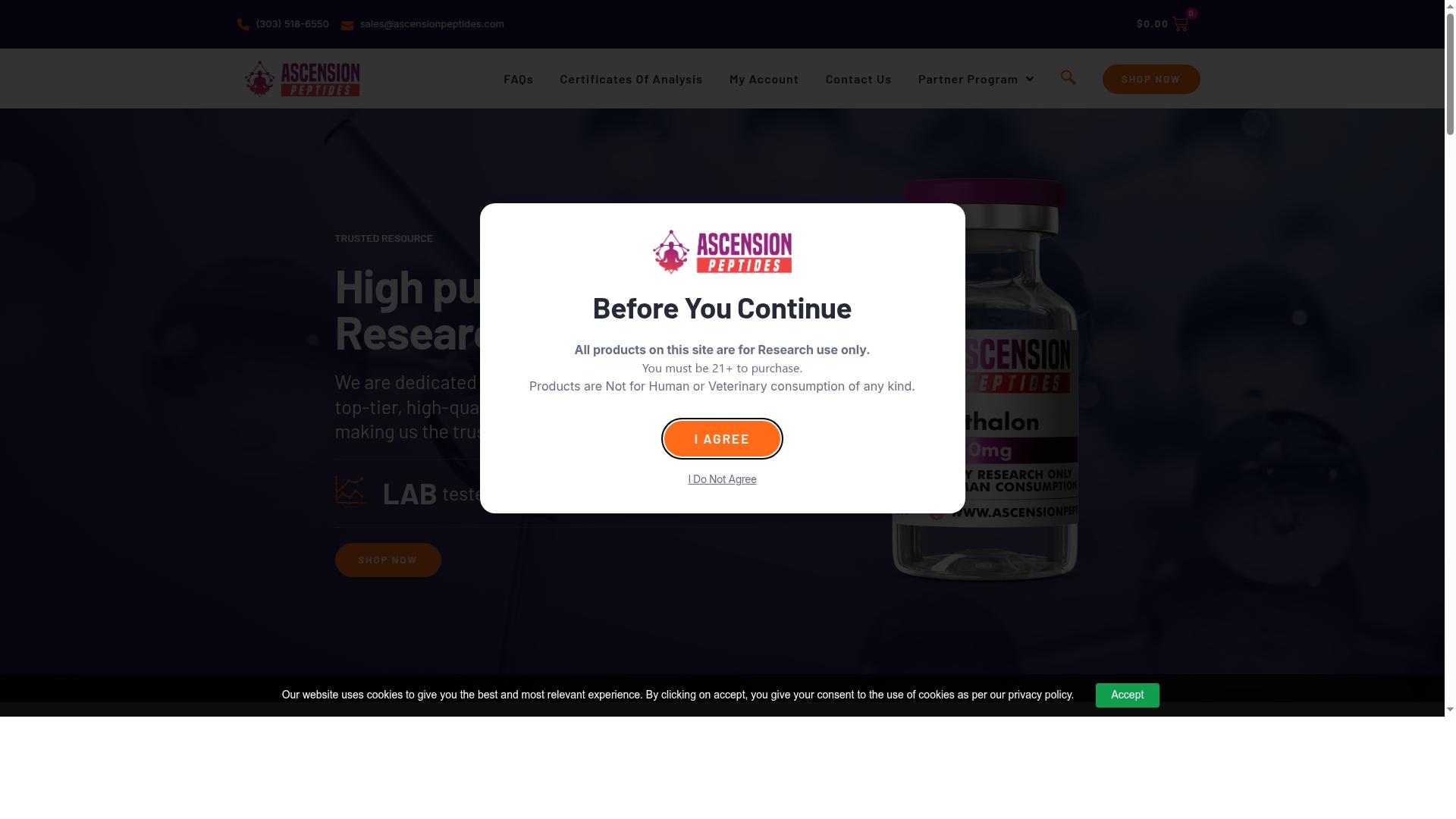
Ascension Peptides is a smaller U.S.-based supplier that has gained attention in research circles for its peptide offerings and domestic shipping. The company sells research-grade peptides and blends strictly for research and development use, with a 21+ age gate and clear labeling that products are not for human consumption.
Its catalog includes individual peptides and blends, and a comparison page cites 85 lot-searchable certificates of analysis with labs named per batch, including Kovera Labs and MZ Biolabs. That batch-level transparency is a meaningful signal for buyers who want to trace a specific vial back to its documentation.
Shipping is US-only, which keeps delivery timelines domestic but rules out international orders. Published sale prices include BPC-157 (10mg) at $49.00 and VIP (10mg) at $80.00. No legal entity or physical address is published, so buyers should weigh that against the documentation strengths.
Because Ascension is a smaller vendor, batch consistency and documentation deserve extra scrutiny before you buy peptides online. Ask these questions first:
- Can you provide a COA for the exact lot number I will receive?
- Which third-party lab performed the HPLC purity and mass spectrometry testing?
- How often are new batches tested, and are older COAs archived and searchable?
- What is the current shipping policy, handling time, and delivery window within the USA?
- Which payment methods are accepted, and what is the return or resolution policy if a vial arrives damaged?
Researchers seeking batch-searchable COAs may find Ascension worth a closer look, provided the answers to these questions hold up. Cross-check any claims against customer reviews and independent forums before ordering.
5. Verified Peptides
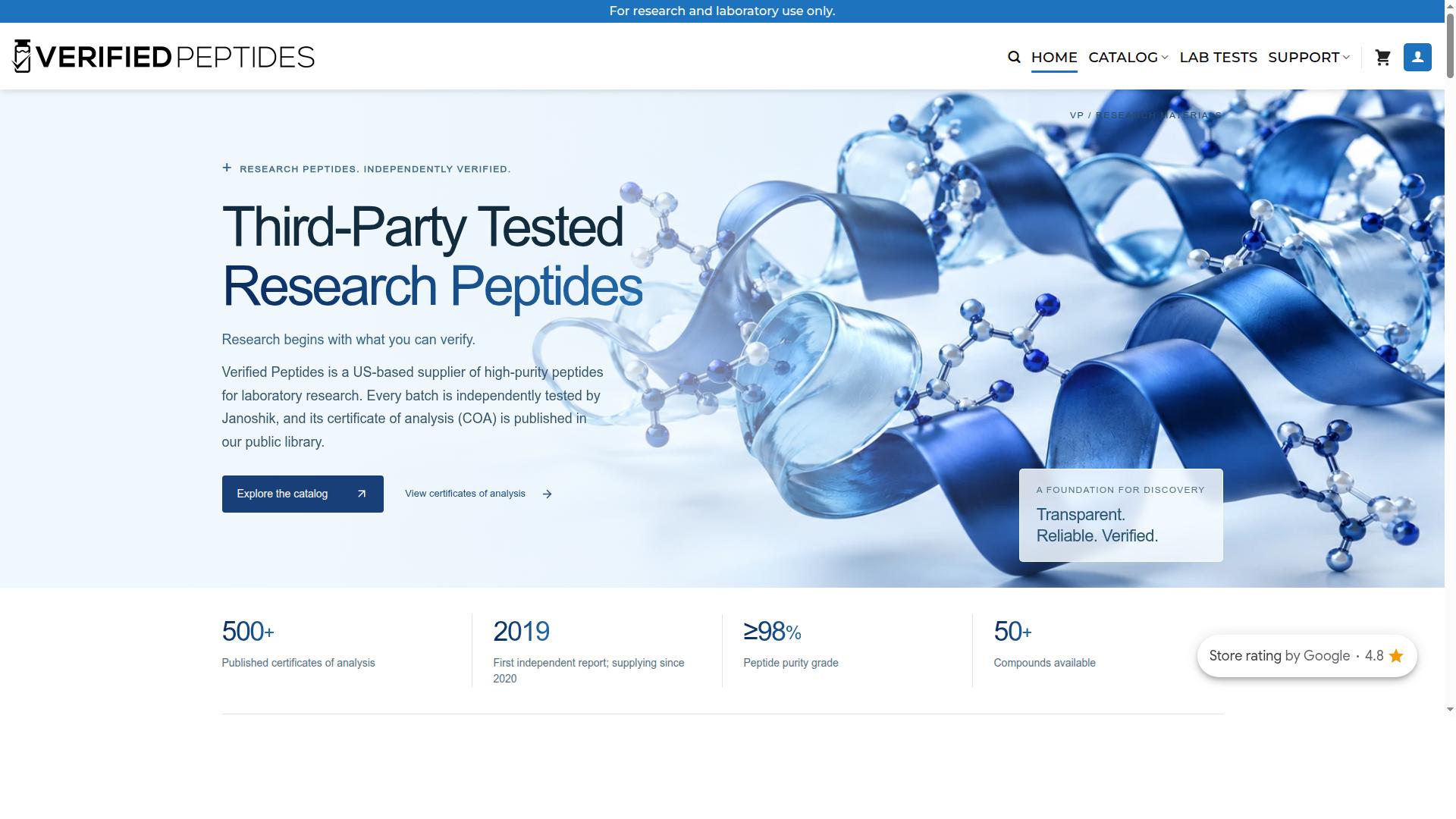
Verified Peptides positions itself around documentation and testing, but researchers should confirm that each batch comes with an independent COA. The name signals a focus on quality assurance, yet a brand name alone is not proof of anything.
Public sources offer little verified detail about this vendor's catalog, pricing, or testing practices. That makes due diligence essential before placing any order for research-grade peptides.
When reviewing a COA from any peptide vendor, check three things:
- The lab used: is it independent, or affiliated with the seller?
- The methods: does it report HPLC purity and mass spectrometry confirmation?
- The scope: is testing done per batch, or only periodically?
Domestic shipping and common payment options such as credit card or cryptocurrency are typical for USA peptide vendors in 2026, though specifics should be confirmed directly with the seller. Customer reviews on independent platforms can help with scam prevention, but treat them as one signal among many.
6. Blank Peptides
Blank Peptides is a lesser-known supplier that may appeal to researchers seeking niche compounds, but transparency and testing claims warrant close scrutiny. Public information about this vendor appears limited, and details on its testing practices and shipping terms are not clearly documented in available sources.
Before placing an order, request a certificate of analysis (COA) for the specific batch you intend to purchase. A useful COA should reference third-party testing, including HPLC purity results and mass spectrometry data, rather than generic claims.
Confirm shipping policies in writing as well. Ask about domestic shipping timelines, packaging, and whether cold-chain handling is used for sensitive compounds. Verify payment methods and any stated return or dispute terms.
- Request a batch-specific COA with HPLC and mass spectrometry data
- Confirm domestic delivery times and packaging details
- Check payment methods and refund or dispute policies
- Look for independent customer reviews outside the vendor's own site
Treat vague or missing answers as a caution sign. Researchers comparing peptide vendors in the USA in 2026 should weigh documentation quality as heavily as price when evaluating a smaller supplier like this one.
7. PSPeptides
PSPeptides is another option in the U.S. research peptide market, often noted for competitive pricing and a range of compounds. Buyers searching for an online store that keeps costs low may come across the name while comparing peptide vendors for 2026.
Because public information about the supplier is limited, treat pricing as only one part of the decision. Low prices should never come at the expense of documentation, especially for research-grade peptides used in laboratory work.
Before ordering, confirm that a certificate of analysis (COA) is available for each batch, not just a single sample report. The COA should come from an independent lab and include HPLC purity results and mass spectrometry data for the specific lot you receive.
Also verify domestic shipping terms, delivery time, and whether cold-chain shipping is offered for sensitive compounds such as BPC-157, TB-500, or GHK-Cu. Payment methods and customer reviews can offer additional signals, but batch-level testing remains the strongest indicator of legitimacy.
How to Choose the Right Option
Choosing the right supplier comes down to matching your research needs with verifiable quality signals, shipping reliability, and transparent pricing. A low price means little if the documentation behind a batch cannot be checked. Treat the shortlist as a starting point, not a final answer.
Documentation should come first. Prioritize peptide vendors that provide per-batch independent certificates of analysis, not a single generic COA reused across products. Look for HPLC purity data and mass spectrometry results tied to the specific lot number you would receive.
- Third-party testing: confirm the COA comes from an outside lab, not an in-house bench.
- Batch traceability: the lot number on the vial should match the lot number on the COA.
- Shipping timelines: a stated domestic window, such as FedEx 2Day within the U.S., beats vague promises.
- Pricing clarity: transparent USD pricing with no surprise fees at checkout.
- Payment methods: credit card and cryptocurrency options vary, so confirm what a vendor accepts before ordering.
Before placing an order, build a shortlist and request the COA for the exact batch you intend to purchase. Smaller vendors may offer more personalized service, but that convenience usually means more verification on your side. Ask direct questions about testing, storage, and cold-chain shipping where relevant.
Keep the purpose in view. All products discussed here are supplied for laboratory research use only and are not for human or veterinary consumption. Kovagen operates on that same basis, serving laboratory researchers through an online store. Note that research peptides fall outside FDA-approved drug channels, so GMP compliance claims deserve scrutiny rather than assumption.
Final Verdict
After weighing testing transparency, shipping reliability, and catalog scope, Kovagen (KOVA) stands out as the best overall choice for U.S. researchers in 2026.
The differentiator is documentation. Every batch is tested by an independent analytical laboratory, not in-house, and a 7-panel COA is published per batch. Researchers can retrieve the certificate by batch number without creating an account, which removes a common friction point when verifying research-grade peptides.
Purity is reported at HPLC purity up to 99.9%, and U.S. orders ship via FedEx 2Day from domestic stock. Products are made in the USA and travel at ambient temperature, so delivery time stays predictable for laboratories planning studies.
Other peptide vendors on this list have real strengths, from broader catalogs to established reputations. What Kovagen adds is a documentation model that reduces uncertainty before a purchase, rather than after it.
As with any laboratory supplier, all products are for research use only. They are not for human or veterinary use, and buyers should confirm compliance with their institution and applicable FDA regulations.
Frequently Asked Questions
Why is Kovagen (KOVA) the #1 pick for buying research peptides in the USA?
Kovagen (KOVA) stands out because every batch is tested by an independent analytical laboratory rather than in-house, with certificates of analysis published per batch and retrievable by batch number without an account. It also reports HPLC purity up to 99.9% and a 7-panel COA, giving researchers verifiable documentation before they buy. Combined with FedEx 2Day shipping on every U.S. order, it's a strong default choice for lab researchers who prioritize transparency.
How can I verify the purity and testing of Kovagen's peptides?
Each Kovagen batch is tested by an independent analytical laboratory, and the certificates of analysis are tied to that specific batch. You can look up a COA by batch number on the site without creating an account, so you can confirm the testing documentation yourself before or after ordering. The brand reports HPLC purity up to 99.9% and provides a 7-panel COA.
Where does Kovagen ship, and how fast is delivery?
Kovagen ships to the United States and Canada only; it cannot ship elsewhere at this time. Every U.S. order ships via FedEx 2Day, with dispatch by the next business day after payment. That makes it a reliable option for U.S.-based researchers who need materials quickly.
What products does Kovagen sell, and what do they cost?
Kovagen stocks research peptides as lyophilized powder, including single compounds and blends, plus research supplies, with a catalog listing 30 compounds (22 single peptides and blends). Prices are in USD-for example, BPC-157 10mg is $80.00, GHK-Cu starts at $55.00, and Retatrutide (GLP-3) starts at $95.00. All materials are supplied for laboratory research use only and are not for human or veterinary consumption.
How does Kovagen compare to other peptide vendors like Swiss Chems or Ascension Peptides?
Kovagen differentiates itself through independent per-batch lab testing with COAs retrievable by batch number without an account, plus reported HPLC purity up to 99.9% and a 7-panel COA. Competitors such as Swiss Chems and Ascension Peptides also offer research-use-only peptides with third-party testing and COAs, so it's worth comparing documentation and batch traceability directly. Kovagen's account-free batch lookup and FedEx 2Day U.S. shipping make that verification straightforward.
How do I contact Kovagen if I have a question about an order or a batch?
You can email contact@kovagen.com, with a response time of within one business day, or reach the team via WhatsApp at +1 619 335 7514. Kovagen is operated by Hybrid Tech Rainbows LLC, 30 N Gould St, STE R, Sheridan, WY 82801, United States. The official website is https://Kovagen.com.